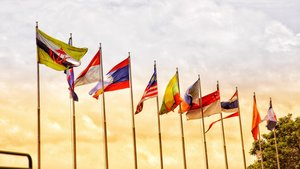
For students from Vietnam, Pakistan, Cambodia, and Laos, the Belt and Road Initiative represents far more than grand narratives of infrastructure construction and trade exchanges. It has become a tangible bridge to knowledge, channeling thousands of young people from Southeast and South Asia toward Chinese universities and research institutions. Over the past five years, this ancient trade route has evolved into an educational superhighway, creating pathways that connect aspirations with opportunities.
Scholarships: Keys That Unlock Doors
“I only heard about Chinese scholarship programs initially, never imagining the application process would be simpler than I anticipated,” recalls Vivian Chen, a Cambodian student currently pursuing a master’s degree in international business at Shanghai University of Finance and Economics. “The Chinese Government Scholarship covers all tuition fees and includes a living allowance of 2,500 yuan monthly, allowing me to focus entirely on my studies.”
According to the China Scholarship Council, scholarship quotas for Belt and Road countries increased by 15% in 2026 compared to the previous year. These scholarships span undergraduate, master’s, and doctoral levels, with engineering, computer science, and agricultural science emerging as the most popular fields. For Pakistani students, specialized scholarships under the China-Pakistan Economic Corridor project offer direct pathways to employment opportunities.
“My father is an engineer who told me China leads the world in infrastructure development experience,” explains Ahmed Khan, a Pakistani civil engineering student at Beijing Institute of Technology. “After receiving the Silk Road Scholarship, I can learn the most advanced technologies while participating in actual projects—this became my primary reason for choosing China over other countries.”
Beyond the Classroom
The value of studying in China extends far beyond academic education. Vietnamese student Nguyen Thi Thu Yue, studying Lao language and regional studies at Sichuan University, discovered that cross-cultural exchange opportunities at Chinese universities are becoming invaluable assets for her career.
“I participated in a China-Vietnam youth reading activity where I met over 200 young people from both countries,” Thu Yue shares. “This direct interpersonal exchange gave me deeper understanding of bilateral relations and established valuable networks. After graduation, I hope to work in cultural exchange between China and Vietnam, and these experiences will be my greatest advantage.”
For Pakistani students, STEM forums and industry exchange activities provide platforms to transform academic knowledge into professional opportunities. The “STEM Forum for Pakistani Students and Professionals” organized by the Pakistani Embassy has helped dozens of students secure internships at Chinese enterprises.
The Profound Impact of Regional Cooperation
China-ASEAN educational cooperation is creating win-win outcomes across the region. At multiple universities in Yunnan Province, the number of students from Laos and Myanmar has doubled over the past three years. These students not only acquire professional knowledge but also become driving forces for national development upon returning home.
“The sustainable agriculture techniques I’ve learned here are exactly what rural Laos needs,” says Kanphei Sisoulith, an Laotian student studying at Yunnan Agricultural University. “After graduation, I plan to bring these technologies back to my hometown, helping local farmers increase production while protecting our ecological environment.”
This educational investment yields reciprocal benefits. Chinese universities gain international perspectives and multicultural atmospheres, while international students return with professional expertise and cross-cultural communication abilities. More importantly, these young people are becoming living bridges connecting China with the world—their interpersonal networks and shared experiences will form solid foundations for future regional cooperation.
Final Thoughts
For young people considering overseas education, China offers more than just education. It provides a comprehensive platform for understanding China’s development experience, establishing transnational networks, and achieving personal growth. As the Belt and Road Initiative continues deepening, this ancient silk road has regained new vitality, opening doors of opportunity for every dreamer.